Exploring the science of the hive.
Apitherapy refers to the use or study of substances derived from bees and beehives — including honey, propolis, royal jelly, bee pollen and bee venom — for potential health applications, within an appropriately supervised framework.
What we study
Stingless bee honey
Studied for nutrition, bioactive compounds and antioxidant properties.
Propolis
A naturally occurring bee resin containing numerous bioactive compounds being studied for biological effects.
Royal jelly & bee pollen
Apicultural products explored for their nutritional and bioactive composition.
Bee venom
Contains biologically active peptides, including melittin, that are subjects of biomedical research.
From the hive to the laboratory
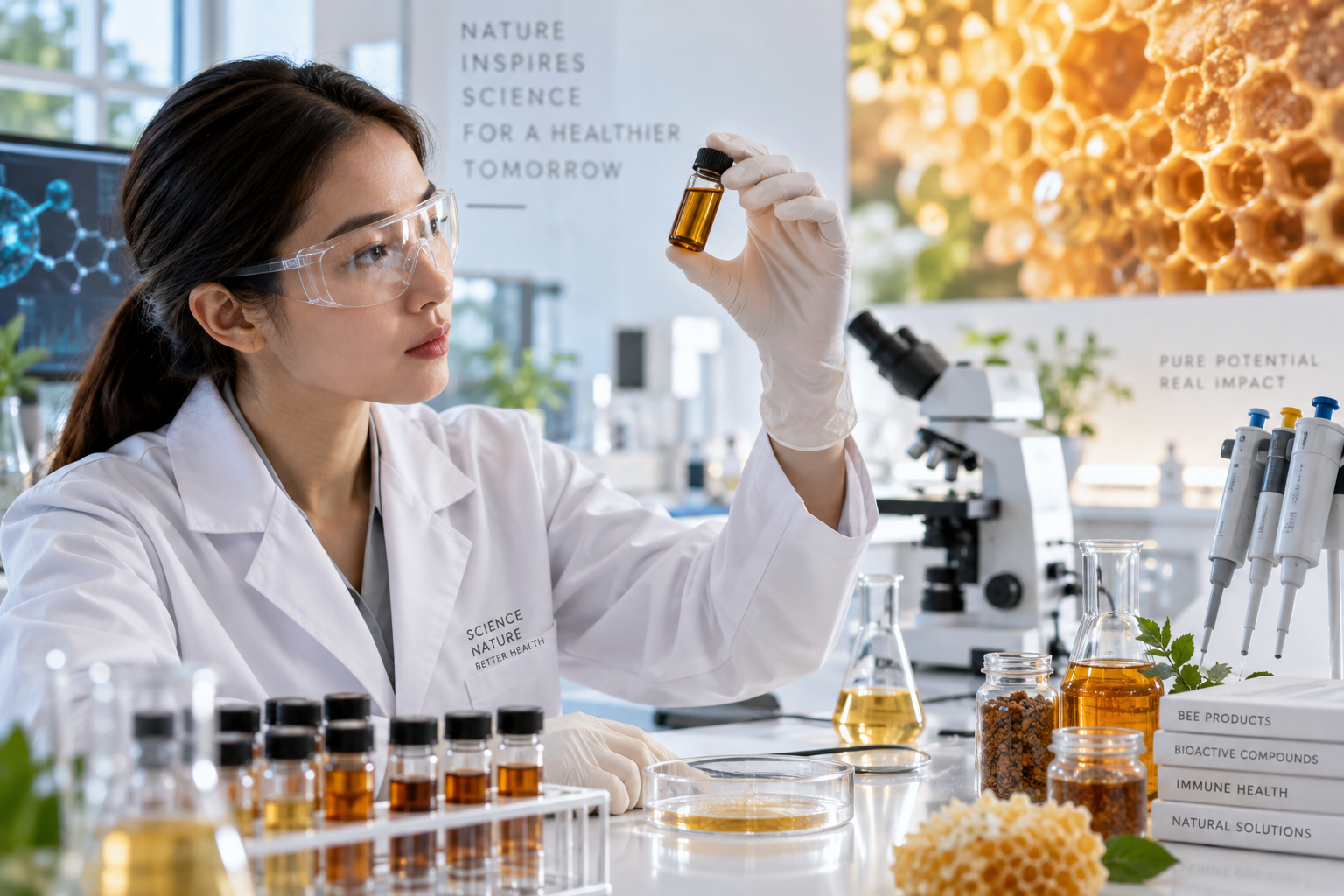
Our R&D work may involve formulation, delivery technologies, laboratory studies and collaborations. We describe each activity by its actual stage of evidence.
Preclinical For cancer specifically, bee-venom and melittin research is described using language such as "being investigated," "preclinical research" and "potential mechanisms." We do not present bee venom or melittin as an established cancer treatment.
Curious about apitherapy?
Ask us what the current evidence does — and does not — support.